Line 07
The phone in the console
Every message feels urgent at a red light. Most of them can wait until the car is parked.
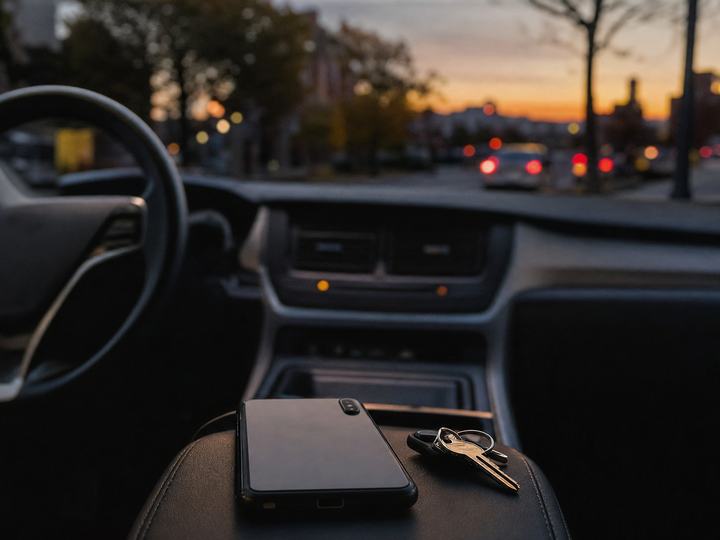
A phone in a moving car competes with the road for the same few seconds of attention. A message preview lights up, the eyes drop, and the car keeps going. At 40 miles an hour a car covers about 60 feet every second, so a two-second glance at a screen means more than a hundred feet of road that nobody is watching.
Why a glance takes longer than it feels
The eyes come back up quickly. The mind takes longer. After reading even a short message, a driver tends to keep thinking about it, composing a reply or replaying the tone, and that leftover attention is slower to notice a brake light or a cyclist pulling away from the curb. Hands-free calls keep both hands on the wheel, though the conversation still draws attention off the road.
Settings that hold messages back
Most phones have a driving mode, often part of the same settings used for quiet hours at night. It can switch on when the phone connects to the car's Bluetooth or senses motion, silence notifications while the car is moving, and send an automatic reply saying the message will be read later. The usual exceptions still apply: a short list of people can get through, and a second call from the same number rings.
Setting it to turn on by itself matters. A driving mode that has to be switched on by hand tends to stay off for short trips, and most trips are short.
What the rules say in Texas
Texas has banned reading, writing or sending electronic messages while driving since September 2017. Austin goes further: a city ordinance requires drivers and cyclists to keep the phone out of their hands while moving. A phone mounted on the dash and used by voice is the usual way to stay inside both rules, and a message that has to be read can wait for a parking lot.
Passengers can take the phone
On a longer drive, the simplest fix is to hand the phone to whoever sits in the passenger seat. They can read directions aloud, answer a message with a short "driving, will call later," and decide what is worth interrupting the driver for. With children in the back, the same person can take charge of the music and the questions about how much longer. Parents teaching a new driver often make this a house rule long before the license arrives.
When a crash happens anyway
A careful driver can still be hit by someone who was looking at a screen. The first steps are the ordinary ones: check on everyone, call the police, photograph the cars and the intersection, and get the other driver's name and insurance details. Here the phone earns its place as a camera and a notebook.
Whether the other driver was on a phone is rarely obvious at the scene, and it can matter later when fault is decided. Witnesses sometimes notice it and phone records can show it, but a private person has little way to get those records. That is one reason someone hit by a distracted driver may want an Austin car accident lawyer looking at the crash while the evidence is still fresh.