Line 04
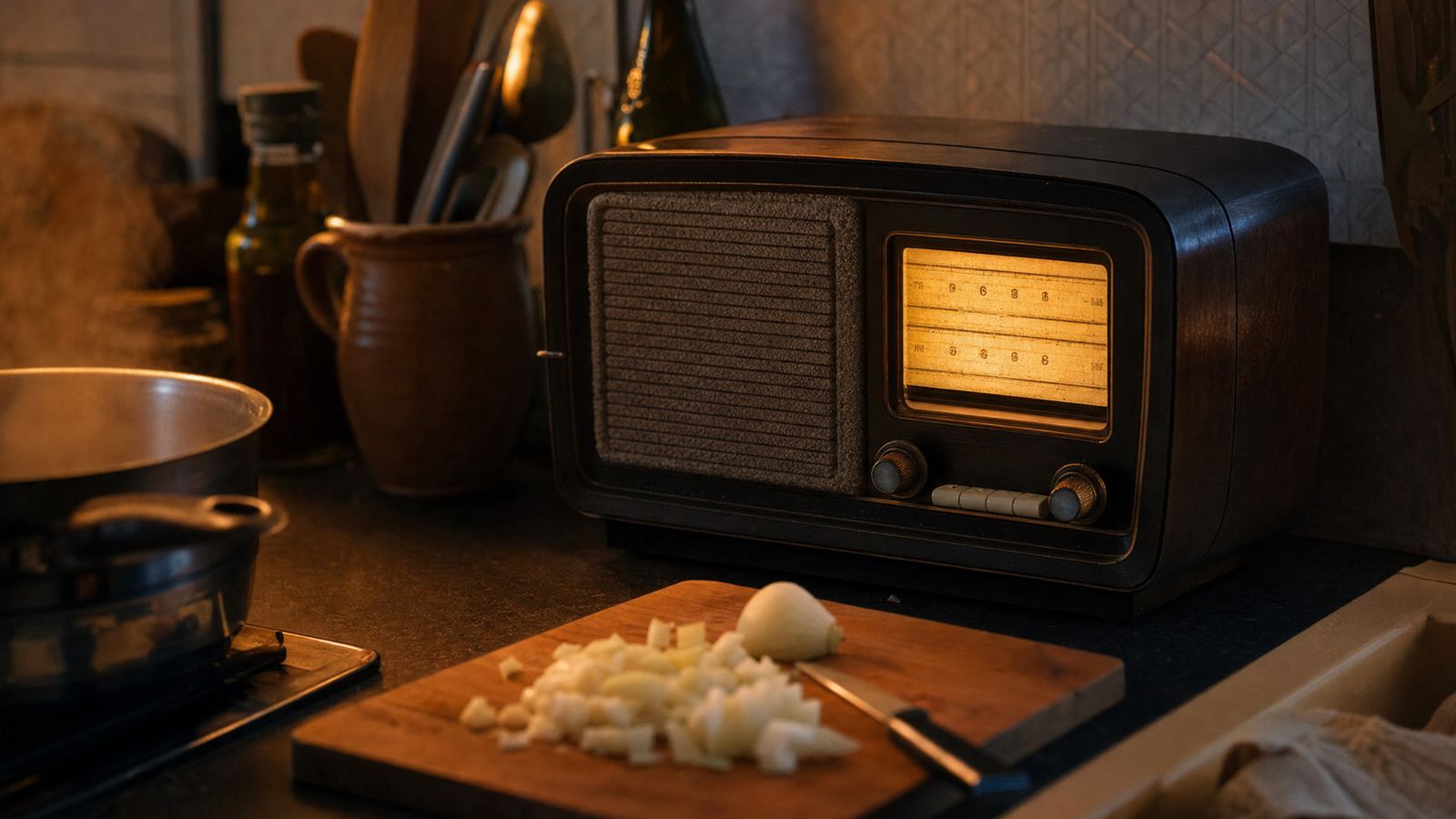
A radio left on in the kitchen
Background sound asks for its own kind of attention, and it has a long history in the house.
In a lot of houses the radio in the kitchen was never really turned off. It sat on the counter or on a shelf above the sink, tuned to one station for years, and it talked while people cooked, washed up and passed through. Nobody sat down to listen to it. It was simply there, filling the room at a low volume, and when something important came on, somebody reached over and turned it up.
That last motion says a lot about how people listen. Most of the time the sound was half-heard. Weather, traffic, a farm report, a ballgame in the late innings, a song everyone knew. The mind took in the shape of it without holding the words. Then a familiar voice changed tone, or a name came up, or the word "warning" was spoken, and attention snapped to it.
Listening with half an ear
People are surprisingly good at this. In a noisy room, most people can follow one conversation while ignoring others, and still catch their own name spoken across the room. The background is processed just enough to notice when something in it matters. A radio left on in the kitchen leans on that ability all day, much as the switchboard operators once did at their boards.
Local stations understood it well. Announcers repeated the time constantly, because someone half-listening might need it. Weather came at the same minutes past the hour, every hour. Severe weather alerts used a distinct tone that cut through whatever was playing. The whole format was built for a listener who was busy with something else.
What it was good for
For a household, a kitchen radio was a shared clock and a shared source of news. Children learned the rhythm of the morning from it: the farm report meant it was time to leave for the bus, the school closings came on during snow, the traffic report came after the news. In rural places it was often the fastest way to hear about a storm, a road closure or a fire.
It also kept people company. People who lived alone left it on for the voices. People working long hours at home left it on for the pace, the way music sets a tempo for chopping vegetables or folding laundry. None of that required close listening. It required only that the sound was there and familiar.
Background sound now
A phone can do everything the kitchen radio did, and much more, but it tends to be used differently. A podcast or playlist is chosen, started and stopped. It follows one person from room to room in a pair of earbuds. The shared, low-volume layer that a whole household heard together has become private.
Something is gained in that, since everyone hears what they picked. Something is lost too. The family that hears the same weather report at seven in the morning has a common picture of the day. A household where each person carries their own audio has to compare notes.
Some people have gone back to a small radio on the counter for exactly that reason. It is cheap, it needs no account, and it treats everyone in the room the same. It also brings back the turn-it-up gesture, a small and useful reminder that most sound can be allowed to pass by until something in it asks for attention.
Choosing what gets through
The kitchen radio worked because it had a short list of things that could interrupt: a voice changing tone, a name, a warning. Most of the devices in a modern house could use the same discipline. A few sounds that always come through, and everything else kept low enough to ignore.