Line 02
The half-read message
Preview text shows enough of a message to react to and too little to understand.
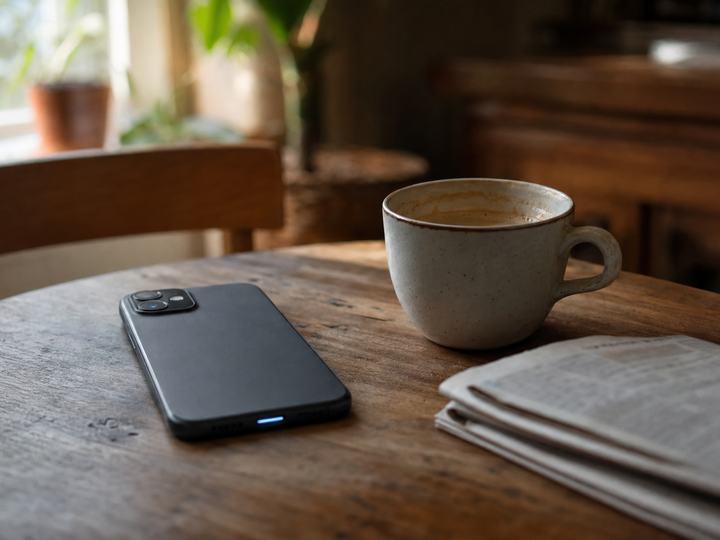
Most messages are first read in a strip a few words long. The phone lights up, the lock screen shows a name and the opening of a sentence, and the reader decides in that moment whether the rest can wait. A good share of the misunderstandings in modern messaging start in that strip.
A preview cuts a message at a fixed length with no regard for meaning. "Can you call me when you get a" reads one way. "Can you call me when you get a chance, nothing urgent" reads another. The person who wrote it saw the whole sentence. The person who received it may have seen half and spent the next hour worrying.
Writing for the strip
If a message has a point, put it first. A question that needs an answer belongs in the opening words, ahead of the greeting and the background. If nothing is wrong, say so early: "All fine, quick question about Saturday" lands very differently on a lock screen than "Hey, so I need to talk to you about something."
Names help too. In a family or work thread, the opening word can be the name of the person who needs to act. It tells everyone else they can let it sit.
Reading past the strip
On the receiving side, the useful habit is to treat a preview as notice that a message exists, and to hold off reacting until the full message is open. Replies typed from a preview tend to answer the half that was visible. They also tend to be shorter and sharper than the reply someone would write after reading the whole thing.
Some people turn previews off entirely, so the lock screen shows only that a message arrived and from whom. That removes the half-read problem at the cost of one more tap. Others keep previews for a short list of close contacts and hide them for everyone else. Either way the choice sits in the phone's notification settings, usually app by app.
The read receipt problem
Read receipts add another layer. Once a message shows as read, the sender starts counting. That pressure pushes people to answer from a preview, quickly, before they have had time to think. Turning receipts off removes the counting. It also means accepting that some people will wonder whether a message arrived at all.
Underneath all of it is a simple point about attention. A message gets a few seconds of it on arrival and much more later, if the reader comes back. Writing the first few words for those few seconds makes the later reading easier for everyone.